
Pulley Protection Splint for Climbers: Supporting Finger & Pulley Recovery
Pulley Protection Splint for Climbers: Supporting Finger & Pulley Recovery
We’re excited to now offer a new product at the clinic for climbers recovering from pulley injuries: the pulley protection splint.
What is it?
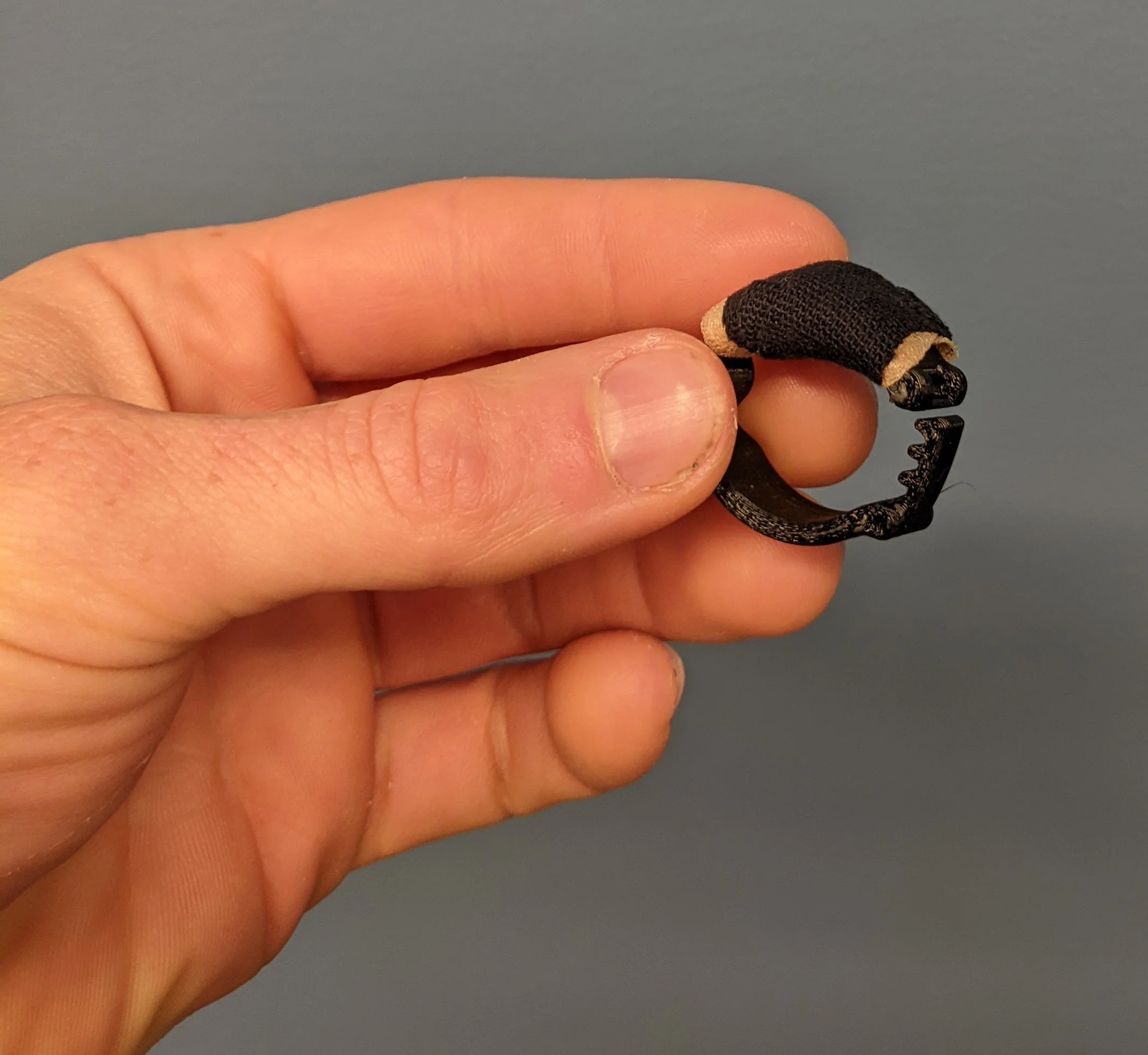
Our pulley protection splints are locally made, 3D-printed ring designed to support the finger during recovery from a pulley injury.
It provides support around the injured pulley during the day and night for a couple weeks after a pulley injury.
What is a finger pulley?
If you’re a climber, you can think of your finger pulleys like the quickdraws on an overhanging climbing route.
Your flexor tendon is like the rope running through those quickdraws. The pulleys keep the tendon close to the bone as your finger bends.
Now imagine removing one of the quickdraws in the middle of the route. The rope would no longer stay close to the wall. It would bow away from it.
A similar thing can happen with a pulley rupture.
In medical terms, the pulleys hold your finger’s flexor tendon close to the bone. With a partial tear or complete rupture, the pulley may no longer be able to maintain the tendon firmly against the bone. This can affect how your finger moves and can make returning to climbing more challenging.
For more information about pulley injuries, check out our previous blog post: Climbers: Keep your pulleys healthy!
Why wear a pulley protection splint?
During the recovery process, a pulley protection splint can help:
Prevent further damage to the finger
Support the healing process
Help you progress through rehabilitation and return to climbing sooner
It’s important to note that the splint is not designed to be worn while climbing. It also should not be worn during certain physiotherapy exercises, as your therapist may want your finger to move and load in a specific way as part of your rehabilitation.
The splint is also not intended as an injury-prevention device. It is designed specifically to support recovery following a pulley injury.
Think you might need one?
If you’ve injured a finger pulley or are unsure whether a pulley protection splint could be helpful for your recovery, book an appointment with us today.
We can assess your injury and help determine the right approach for getting you safely back to climbing.